
APS serves 1.5 million homes and businesses in 11 of Arizona’s 15 counties and is a leader in safely delivering reliable, affordable electricity in the Southwest. APS maintains a diverse range of energy resources, including nuclear from the Palo Verde Generating Station, natural gas, coal, solar, wind and energy storage – a mix that’s about 58% clean. With 140 years of experience serving Arizona, APS is the main subsidiary of Pinnacle West Capital Corp. (NYSE: PNW).
Header

APS Rate Case Hearing Begins; Final Decision to Come Later This Year
Today marks the start of the evidentiary hearing in the Arizona Public Service (APS) rate case before the Arizona Corporation Commission (ACC). This hearing is the latest step in a lengthy open and transparent rate review process that started in June 2025 and will likely continue through the end of 2026.
Why is APS requesting a rate increase?
Current APS rates are based on costs from five years ago. Inflation and rising expenses mean those rates no longer cover what it takes to operate and strengthen the electric grid today. By updating rates to reflect current costs, APS can continue to provide customers with the top-tier reliability they need and expect, especially during Arizona’s long, hot summers.
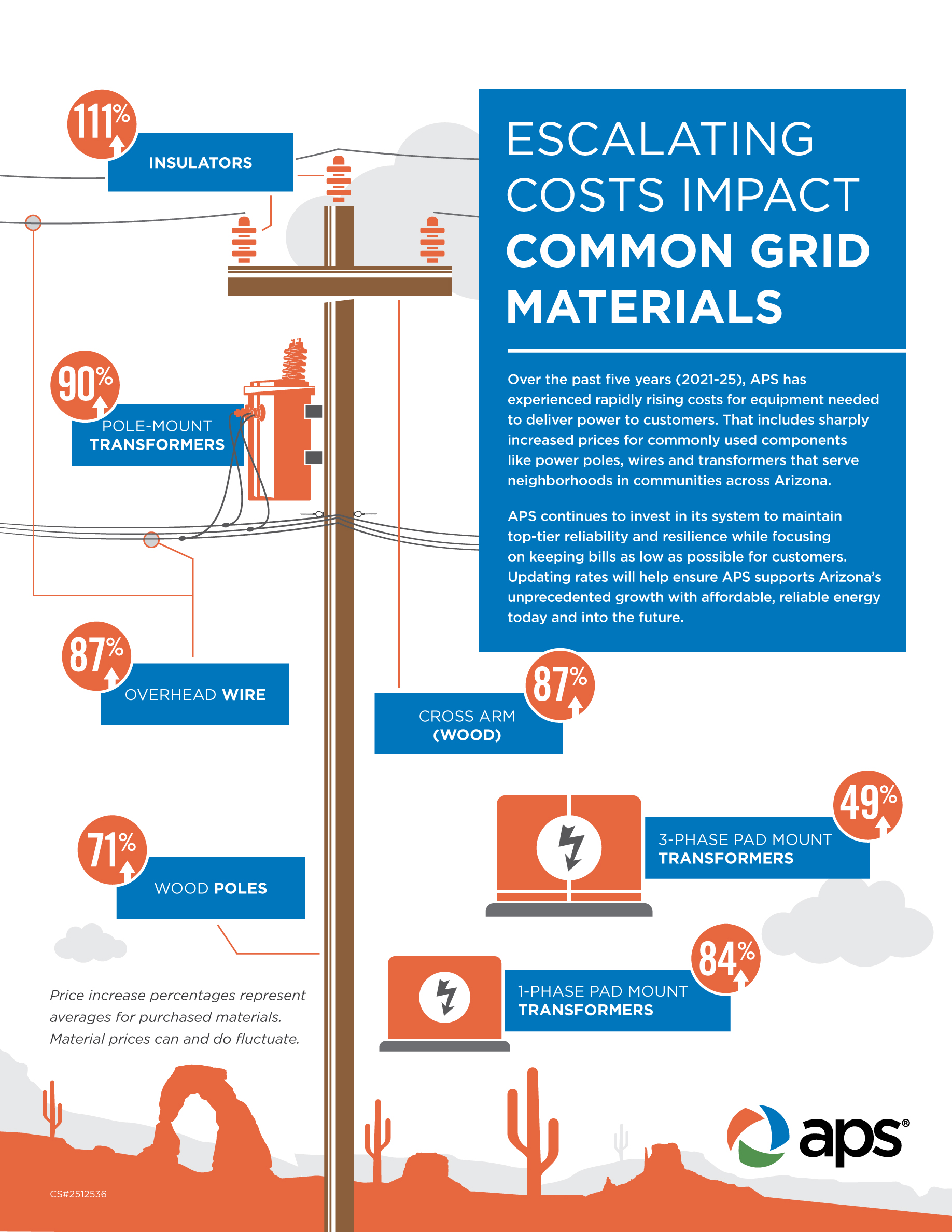
As a regulated utility, APS must look backward to adjust its rates based on the actual costs it paid to serve customers in 2024 and 2025. This ensures rates more accurately match the true costs of providing electric service to customers. For context, over the past five years, APS has experienced rapidly rising costs of equipment needed to deliver power to customers. One example is transformer costs which are, on average, 49-90% higher now than when our rates were last set. (See graphic below.)
How does the rate proposal protect affordability and reliability for APS customers?
In addition to ensuring a reliable energy grid and upgrading equipment, the rate case introduces measures to further support customers. Amid rising costs for infrastructure, equipment and materials, APS is anticipating unprecedented growth within its service territory. To protect residential and small business customers, APS is making sure new large energy users, like data centers, continue to pay their full cost of service.
The plan proposes a rate increase of more than 45% increase for data centers and updated cost allocation for system investments, like power plants, so growth-related costs are assigned to the customer classes driving expansion. APS’s application also outlines a formula rate, under which future costs (e.g., infrastructure, fuel, etc.) are reviewed annually and allocated to the customer group responsible for those costs, such as data centers.
What comes next?
During the hearing, which is expected to last just over a month, APS and other parties (known as intervenors), will present evidence, answer questions and provide on-the-record testimony about energy grid investments APS made in 2024 and 2025 to enable top-tier reliability for its customers. No rate adjustments will occur until the rate case process is complete.
In the months after the hearing concludes:
- The ACC’s Administrative Law Judge will consider the evidence presented and issue a Recommended Opinion and Order (ROO) for the Commission’s consideration.
- APS and intervenors will have an opportunity to file exceptions or responses to the ROO.
- The ACC will publicly review and vote on the case. A final decision is expected toward the end of the year. If approved, a rate adjustment would follow.
What about summer electric bills?
With the arrival of hotter weather, most customers will naturally use more energy as air conditioners work harder to keep homes cool. That higher energy usage in the summer drives higher bills for most customers. APS’s rate proposal will have zero impact on customer bills this summer.
It’s important for customers to know they have options to manage their bills and lower their costs. For example, customers can compare rate plans by using APS’s rate comparison tool at aps.com/compare. Customers can visit aps.com/save for tips to save energy.
Customer Support and Resources
APS helps connect customers facing financial hardship to programs and resources that can make a difference. The Crisis Bill Assistance program provides up to $1,000 for those in need. Eligible customers can also receive monthly discounts of up to 25% or 60% through the APS Energy Support program. Learn more at aps.com/assistance or by calling the 24/7 Customer Care Center. APS advisors are available in English and Spanish at 602-371-7171 or 800-253-9405.
Related stories
7/10/2026
APS Rate Case Hearing Concludes; Process Moves to Next Phase

6/15/2026
Understanding Formula Rates: What They Mean for APS Customers
5/29/2026
Straight Talk – Facts about the APS Rate Case
Stay up to date with our social channels


Newsroom
View up to date news, articles and stories related to APS in the community.



Copyright © 2026 APS. All rights reserved.


