
APS serves 1.4 million homes and businesses in 11 of Arizona’s 15 counties and is a leader in safely delivering reliable, affordable electricity in the Southwest. APS maintains a diverse range of energy resources, including nuclear from Palo Verde Generating Station, natural gas, coal, solar, wind and energy storage – a mix that’s about 58% clean. With 140 years of experience serving Arizona, APS is the main subsidiary of Pinnacle West Capital Corp. (NYSE: PNW).
Header

APS to Seek License Renewal for Palo Verde Generating Station's Nuclear Units
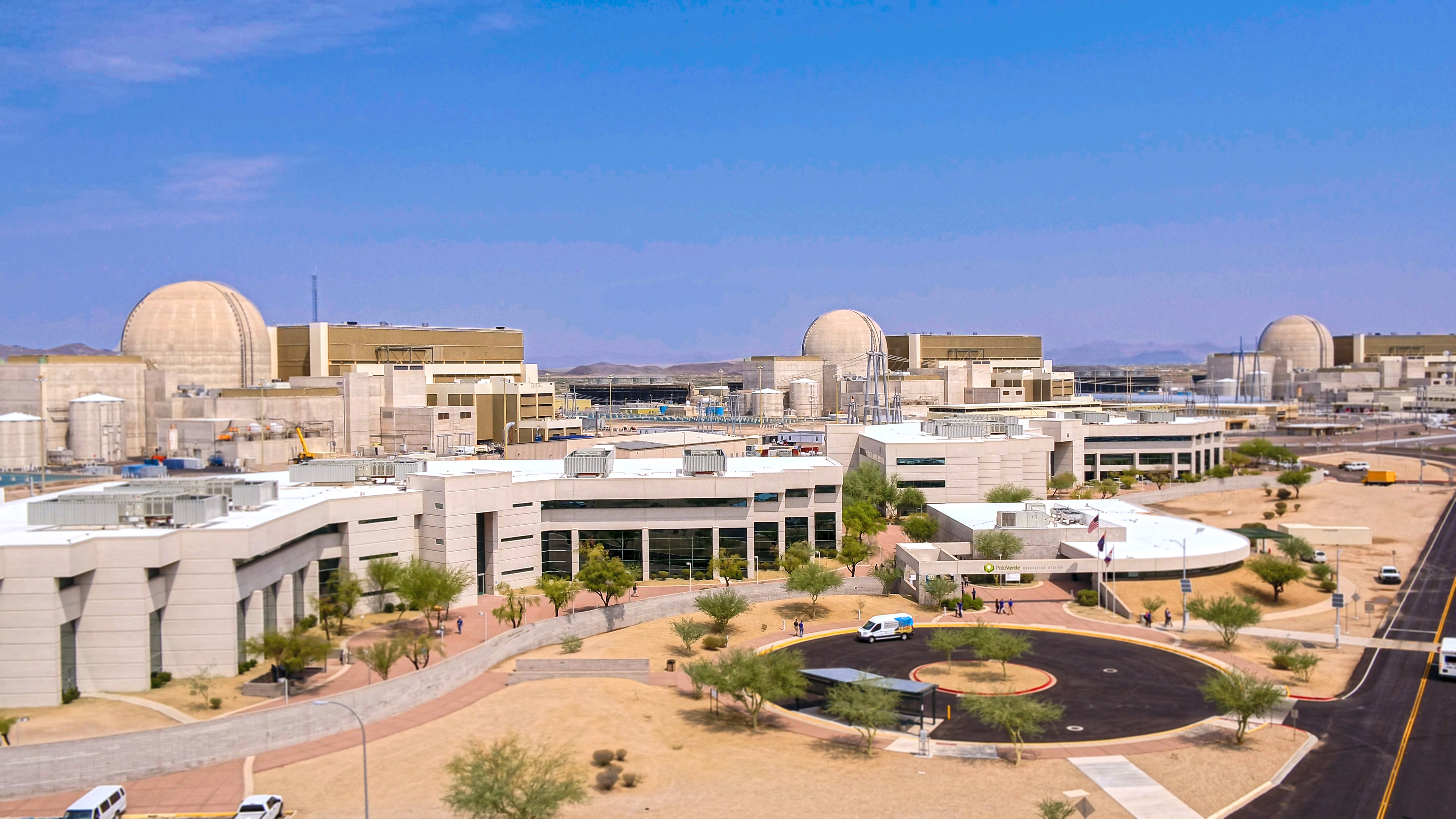
PHOENIX – Arizona Public Service (APS) has officially notified the Nuclear Regulatory Commission (NRC) of its intent to renew the operating licenses for all three units at Palo Verde Generating Station, which could extend operations from the mid-2040s through the mid-2060s.
Located west of Phoenix, Palo Verde is the heart of APS’s diverse energy mix, playing a vital role in supporting Arizona’s economic development by providing 24/7 reliability. With the capacity to produce 4,200 megawatts of clean, carbon-free electricity for four million homes and businesses, Palo Verde is the largest power generator in the western United States.
“Palo Verde Generating Station is essential to our customers, a strong contributor to Arizona’s economy and a cornerstone of our energy future,” said Ted Geisler, APS President and CEO. “Delivering safe, reliable and affordable energy in the desert Southwest for decades, Palo Verde provides the foundation for the around-the-clock service our customers count on every day and especially during the extreme heat of Arizona summers. Our notice to the NRC is another step in ensuring Arizonans and the region continue to benefit from this critical resource for many more years to come.”
NRC License Renewal
- In the 1980s, the NRC licensed Palo Verde’s nuclear units to operate for 40 years.
- In 2011, the NRC approved APS’s renewal application to extend the operating licenses 20 years, allowing the three units to operate through the mid-2040s.
- On March 13, 2026, APS filed a Notice of Intent to submit a Subsequent License Renewal Application to the NRC in late 2027. The application will seek to renew Palo Verde’s operating license for an additional 20 years, allowing Unit 1 to operate through 2065, Unit 2 through 2066 and Unit 3 through 2067.
- After APS files the application, the NRC will evaluate Palo Verde’s strategy to maintain the plant over time, plan for environmental protection and ability to operate safely. Public participation is an important part of the license renewal process, and the NRC will hold public meetings to share information and seek input.
As nuclear power continues to support the nation’s energy needs, a license renewal for APS would extend Palo Verde’s life to 80 years. APS is following the NRC’s established license renewal process, which has resulted in renewing licenses to 80 years for 10 stations across the country. The NRC is currently reviewing applications for three stations.
“Nuclear power plants harness energy from atoms to produce electricity. It’s one of the most rigorously regulated and carefully monitored energy sources in the country, and these facilities are designed with multiple layers of safety,” said Adam Heflin, Executive Vice President and Chief Nuclear Officer at Palo Verde Generating Station for APS. “Palo Verde Generating Station operates reliably and provides stable generation – helping keep the grid dependable and long-term energy costs more affordable for customers.”
The Future of Nuclear Power
As Arizona continues to grow and energy needs increase, in addition to seeking license extensions for Palo Verde, APS is assessing new nuclear technologies and leading a collaborative effort with Salt River Project (SRP) and Tucson Electric Power (TEP) to explore and advance additional nuclear generation in the state. In 2025, the utilities teamed up to apply for a grant with the U.S. Department of Energy for funding to support the evaluation of possible sites. While awaiting a decision, the three utilities continue to move forward with their siting efforts as they consider many types of nuclear energy solutions, including small modular reactors and large reactor projects.
APS and Palo Verde Generating Station’s History of Service to Arizona
Across high-country forests, desert cities and rural communities, this year marks a significant milestone as APS celebrates 140 years of powering people’s lives. As an original Arizona company, APS is committed to the communities it serves and dedicated to the state’s success. Palo Verde has served the state for 40 of those years, underscoring the invaluable impact nuclear power has had on shaping society and enabling economic development in the state.
Palo Verde Generating Station Quick Facts:
- Largest energy producer in the U.S. for nearly 40 years.
- Three of the nation’s 94 nuclear units are located at Palo Verde.
- The NRC issued an operating license for Unit 1 on June 1, 1985.
- Unit 2 received its license on April 24, 1986.
- Unit 3 was licensed on Nov. 25, 1987.
- Palo Verde is unique as the only nuclear power plant in the world that does not have access to a surface body of water. It uses 100% recycled wastewater from surrounding cities for cooling.
- Employs approximately 2,100 full-time workers and 800 to 1,000 seasonal contractors.
- Contributes more than $2.6 billion to local economies and is the largest single Arizona taxpayer with nearly $56 million paid annually in property taxes.
- Generates electricity to serve four million homes and businesses in Arizona, West Texas, New Mexico and Southern California.
- Operated by APS and owned by seven utilities: APS, SRP, El Paso Electric, Southern California Edison (SCE), Public Service Company of New Mexico (PNM), Southern California Public Power Authority (SCPPA) and Los Angeles Department of Water and Power (LADWP).
Related stories
6/16/2025
Palo Verde Generating Station Celebrates 40 Years of Providing Reliable Power to the Southwest
Stay up to date with our social channels


Newsroom
View up to date news, articles and stories related to APS in the community.



Copyright © 2026 APS. All rights reserved.


