Header


Teamwork in Action: APS Assists in Bear Family Rescue
Autumn brought an unexpected visitor—or rather, three to a Flagstaff elementary school. A mother black bear and her two cubs found themselves perched high in a tree on school grounds, lured by the sweet scent of nearby apple trees. What began as a wildlife curiosity quickly turned into a coordinated rescue effort that showcased the power of partnership between Arizona Public Service (APS) and the Arizona Game & Fish Department (AZGFD).
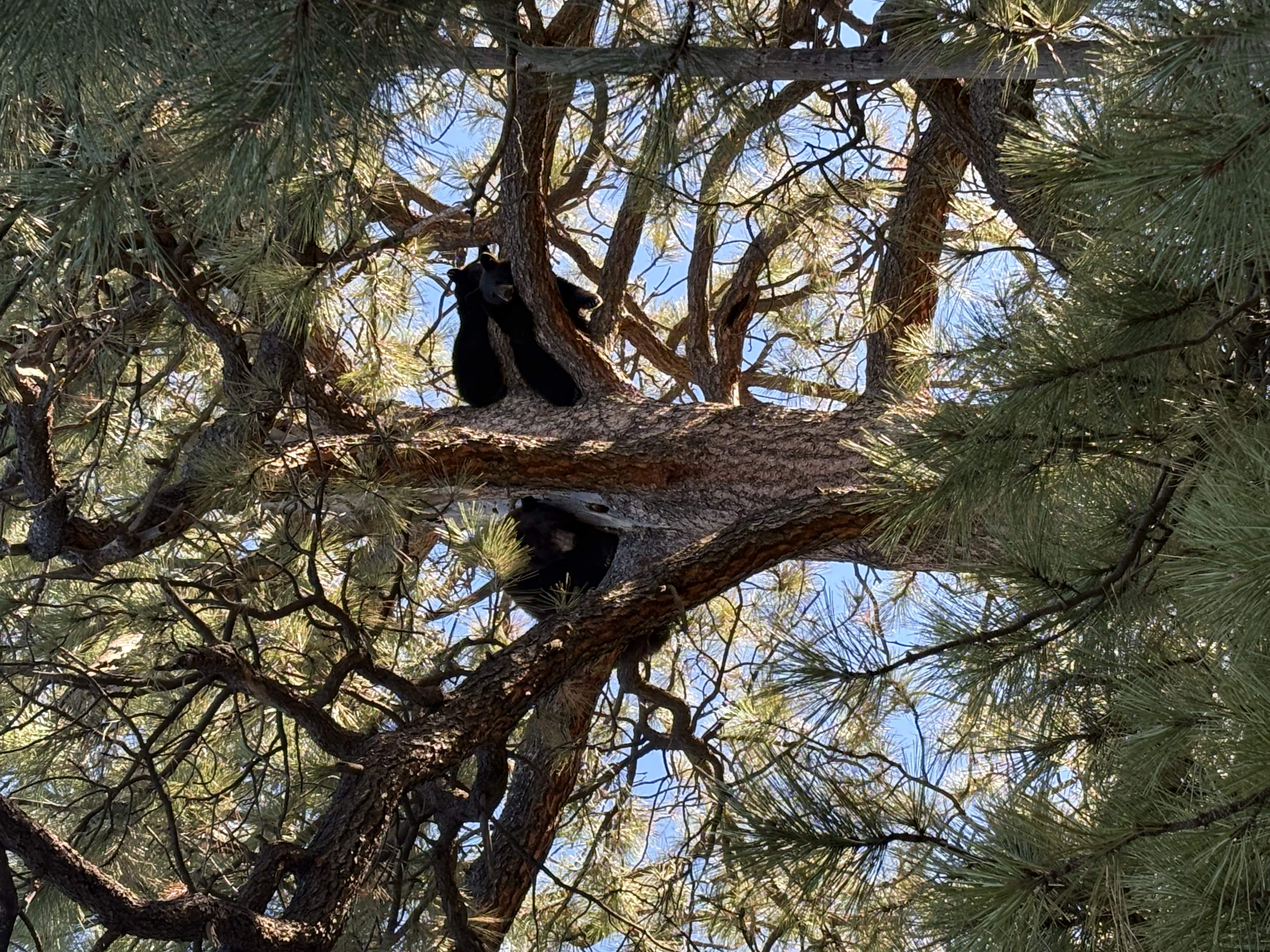
The late October day started like any other for students and staff until someone spotted movement in the branches. It wasn’t squirrels or birds—it was a bear family seeking refuge. School administrators acted swiftly, contacting AZGFD for guidance. Wildlife officers arrived to assess the situation and determined that the safest course was to remove the bears and relocate them far from human activity.
To accomplish that, they needed specialized equipment—and that’s where APS stepped in.
Bucket Trucks and Quick Thinking
APS line workers are no strangers to working at heights, but this time, instead of repairing power lines, this crew was helping wildlife. Using a bucket truck, an APS Flagstaff-based troubleshooter carefully maneuvered close to the tree where the cubs clung nervously to the branches. (The mother had been removed from the tree before the APS crew arrived).
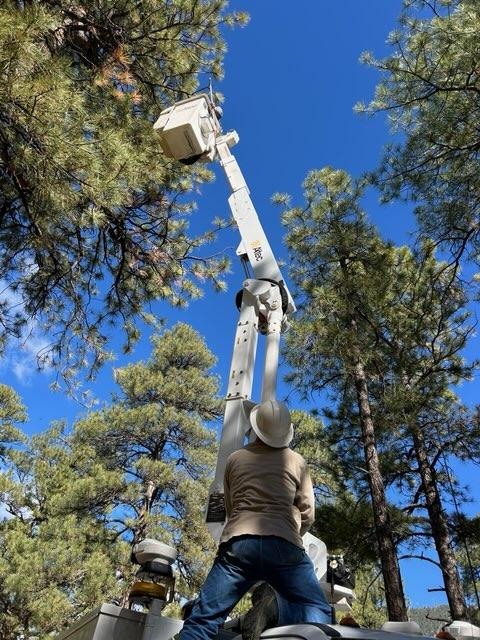
Working together, with APS’s Jim Baldocchi operating the truck and Game and Fish Officer Colby Walton in the bucket, they gently lifted the young bears down one-by-one and placed them in secure carriers. Their mother, who had remained nearby, was later reunited with her offspring.
“Our priority was making sure everyone stayed safe — kids, staff, and the bears,” said APS ‘s Baldocchi. “We’re proud to assist in situations like this. It’s not every day we use our equipment for wildlife rescues, but when the community calls, we answer.”
Throughout the operation, students were kept indoors, watching the drama unfolding from classroom windows. Teachers used the moment as an impromptu lesson on Arizona wildlife and the importance of coexistence.
For AZGFD, the rescue was a textbook example of how partnerships can make challenging situations manageable.
“These cases can be unpredictable,” explained Walton. “Having APS on site with the right gear allowed us to work quickly and minimize stress on the animals. The cubs were reunited with their mother and relocated to a safe area where they can thrive.”
Walton added that autumn often brings bears closer to populated areas as they search for food before winter. Apple trees, trash bins, and other food sources can draw them into neighborhoods, creating potential hazards for both wildlife and people.
Stevie Kelso, public affairs officer and community liaison for AZGFD, was proud to be part of the operation. “This was a great moment of teamwork between AZGFD and APS," she said.
By late afternoon, the bear family was on its way to a remote habitat, far from playgrounds and power lines. Wildlife officials confirmed all three animals were healthy and unharmed — a relief for everyone involved.
Looking Back: APS’s role in 2024 Rescue
This wasn’t APS’s first brush with wildlife drama. In 2024, the company helped AZGFD in rescuing a lone bear that had wandered into a Prescott neighborhood. That operation required similar ingenuity: APS crews deployed a bucket truck to help wildlife officers safely remove the animal from a tree before moving it to the forest.
“Wildlife encounters are part of life in Arizona,” APS spokesperson Ann Porter said. “We’ve built a reputation for stepping up when needed—whether it’s restoring power after a storm or helping to protect our state’s natural heritage.”
Beyond the heartwarming outcome, these rescues underscore a broader message: community safety and wildlife conservation often go hand in hand. As Arizona’s population grows and development expands into natural habitats, encounters like this become more common. Partnerships between APS, wildlife agencies and local schools are essential to ensure these situations end well—for both humans and animals.
Related stories

Stay up to date with our social channels