Header

Click the Español link on any page to view the page in Spanish.
Please note: not all pages are available in Spanish at this time.
- My Account
- Residential
- Business
-
Savings
-
Residential
-
Business
-
- Solar
-
-
Cholla Power Plant Conversion Project

aps
Location: Joseph City, Arizona
Estimated completion date: 2029
Project Overview
APS is planning to convert two units from coal to natural gas at its Cholla Power Plant, located in Joseph City in northeast Arizona, which ceased burning coal in March of 2025. This conversion could add approximately 380 megawatts (MW) of additional energy, enough power to serve about 61,000 Arizona homes.
The Cholla Power Plant has been part of APS’s generation fleet since 1962. The facility historically operated as a coal‑fired power plant and played a long‑standing role in supporting reliable energy.
Construction on the gas conversion is expected to begin in 2028, with a target in-service date of 2029.
Open Houses:
A community open house was held on July 28, 2026 which provided an opportunity for attendees to speak one-on-one with project team members, learn more about the project, ask questions and share feedback. We sincerely appreciate the valuable input provided during this event. If you were unable to attend our in-person open house, please visit our virtual open house, available here.
We welcome your feedback throughout the project. To help us review and consider your input in a timely manner, we encourage you to submit comments by August 13, 2026.
Project need:
This project is about making sure customers have reliable, affordable energy they can count on. Converting coal units at Cholla to run on natural gas would make the most of existing infrastructure, helping meet growing energy needs with a cost-effective, around-the-clock resource that can come online in just a few years.
As demand for energy in Arizona grows, natural gas is critical to deliver reliable service for all customers. It provides flexible, on-demand energy (including during the late afternoon and evening hours when customer energy use is highest) and supports around-the-clock energy needs.
Overall, a diverse energy mix – including nuclear, natural gas, solar, wind, battery energy storage, coal and customer demand response programs – supports reliability while keeping energy bills as low as possible for our customers.
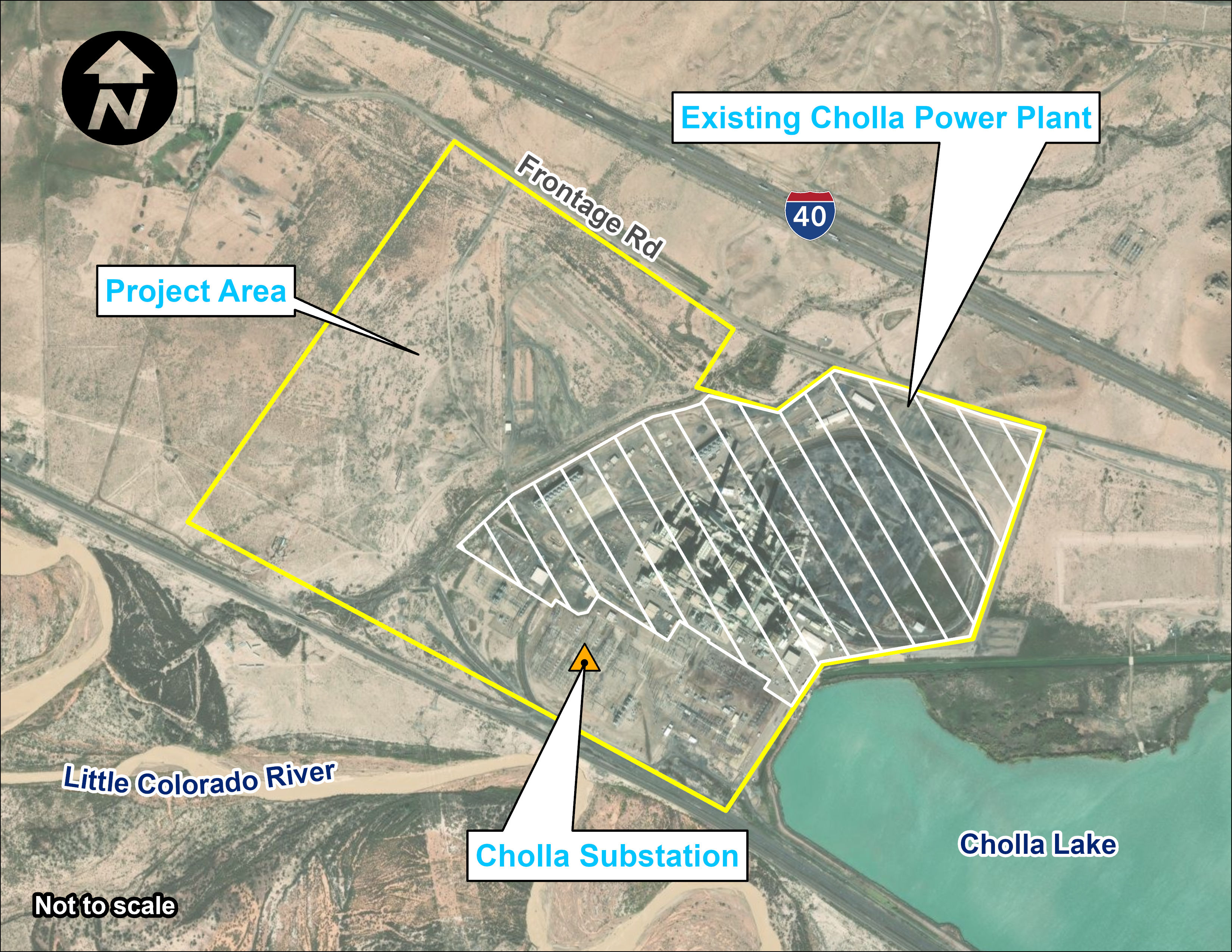
Project Map
Community Input
APS is committed to transparent communication and ongoing engagement with the community. We will be in the project area in July 2026 to share more information. We will provide updates via newsletter, hold a virtual and in-person open house and can be reached via email or phone. For questions or comments regarding the project, please contact us at:
Project hotline: 928-361-2754
Email: Chollaconversion@aps.com
Frequently Asked Questions
How would the units be converted at the Cholla Power Plant?
The coal burning equipment would be removed, and the boiler would be converted to run on natural gas. The process of using the boiler would remain the same.
What transmission infrastructure would you need to build to support this plant?
Because this project would be located at an existing power plant site, very little new transmission infrastructure would be needed, which would help meet growing energy needs in a cost-effective way. Most of the work would involve upgrading existing equipment rather than building new transmission lines.
Where is the natural gas coming from?
The plant will require a lateral line (a smaller diameter pipeline) that would connect to an existing pipeline system.
Why did you stop burning coal at Cholla? Why convert to natural gas now?
Federal regulations under the Regional Haze Program required that APS permanently cease burning coal in Cholla Units 1 and 3 by no later than April 30, 2025. While these same federal regulations provided an option to convert the plant to run on natural gas in the future, earlier evaluations of the conversion didn’t provide an economic benefit for our customers. However, given Arizona’s increasing demand for around-the-clock energy and the long timelines for adding new generation, the conversion has proven to be a viable option to deliver reliable, affordable energy to APS customers.
What economic benefits will the Cholla gas conversion bring to the local community?
The Cholla gas conversion is expected to generate approximately $4 million annually in property tax revenue beginning in 2031 (based on a projected 2029 in-service date). In addition, the project will support local jobs, drive contractor and supplier spending, and provide ongoing community contributions that strengthen the regional economy.