Header


Data Centers How We’re Protecting Customers While Planning for Big Energy Needs
aps
Data centers are a hot topic right now, making headlines around Arizona and the nation. We want to share with you what APS is doing to protect reliability and affordability for residential customers while working to meet the needs of this unique business sector.
The data center industry is growing quickly, driven by the increase in cloud computing services, artificial intelligence and other online data-driven companies. These companies support essential services we all count on and bolster our state’s tech leadership and prosperity.
APS was proactive in developing a high load factor rate in 2017 to ensure rates paid by these customers reflected the cost to serve them. Now, as circumstances and the magnitude of growth have changed, APS is proposing to update this rate so that high load factor users will cover their increasing costs and to ensure residential customers are not subsidizing data centers.
It’s important to note, in 2025, data centers were a relatively small portion of our total peak energy demand – about 5%. The future is bringing new challenges and opportunities, with many data centers and other large energy users looking to come to our state. In fact, the Phoenix metro area ranks second in North America for proposed data center development.
This is a challenge — both here and nationally — because data centers are different from other customers. They require significant levels of energy, operating near peak capacity 24 hours a day, 7 days a week.
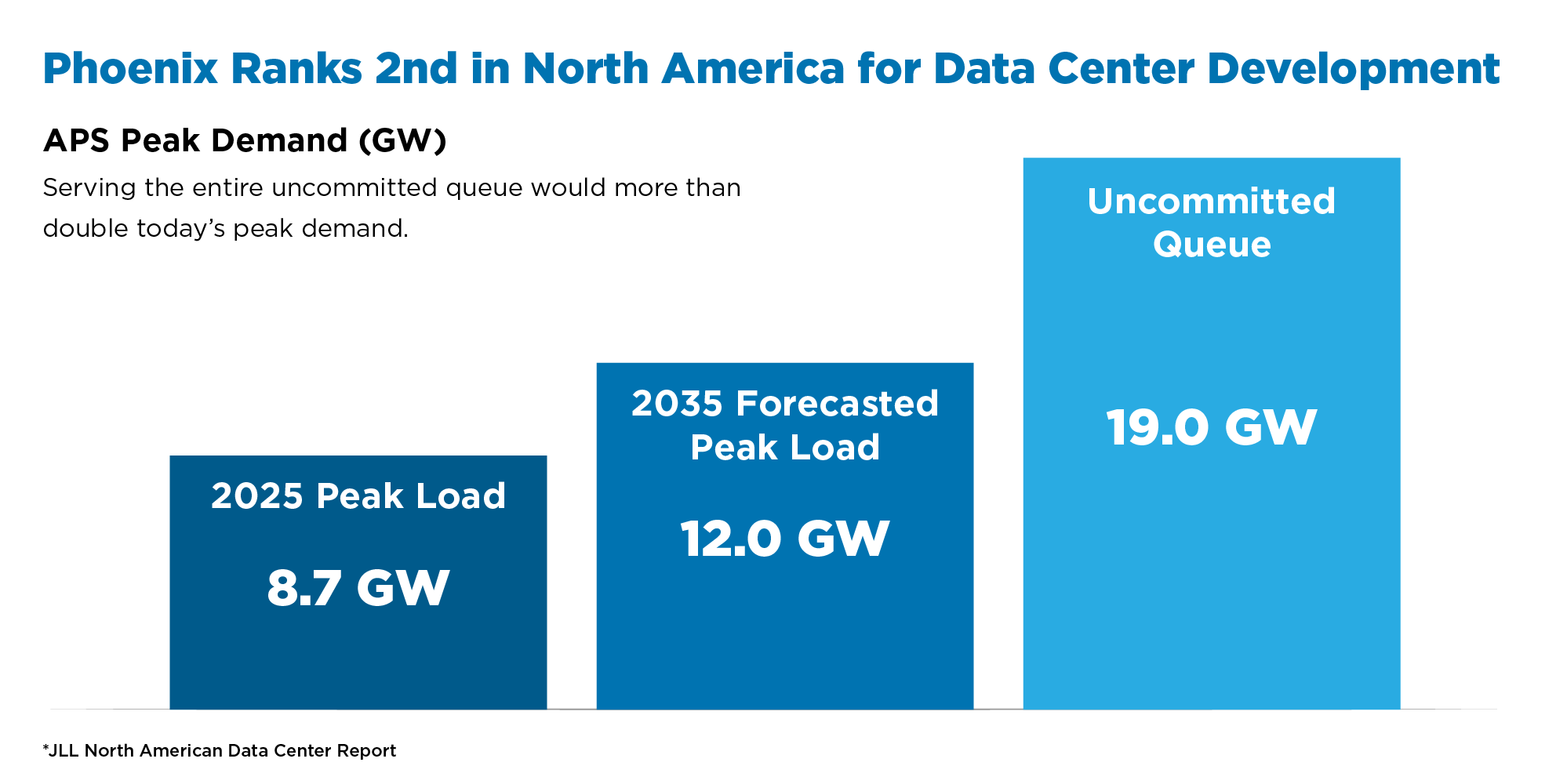
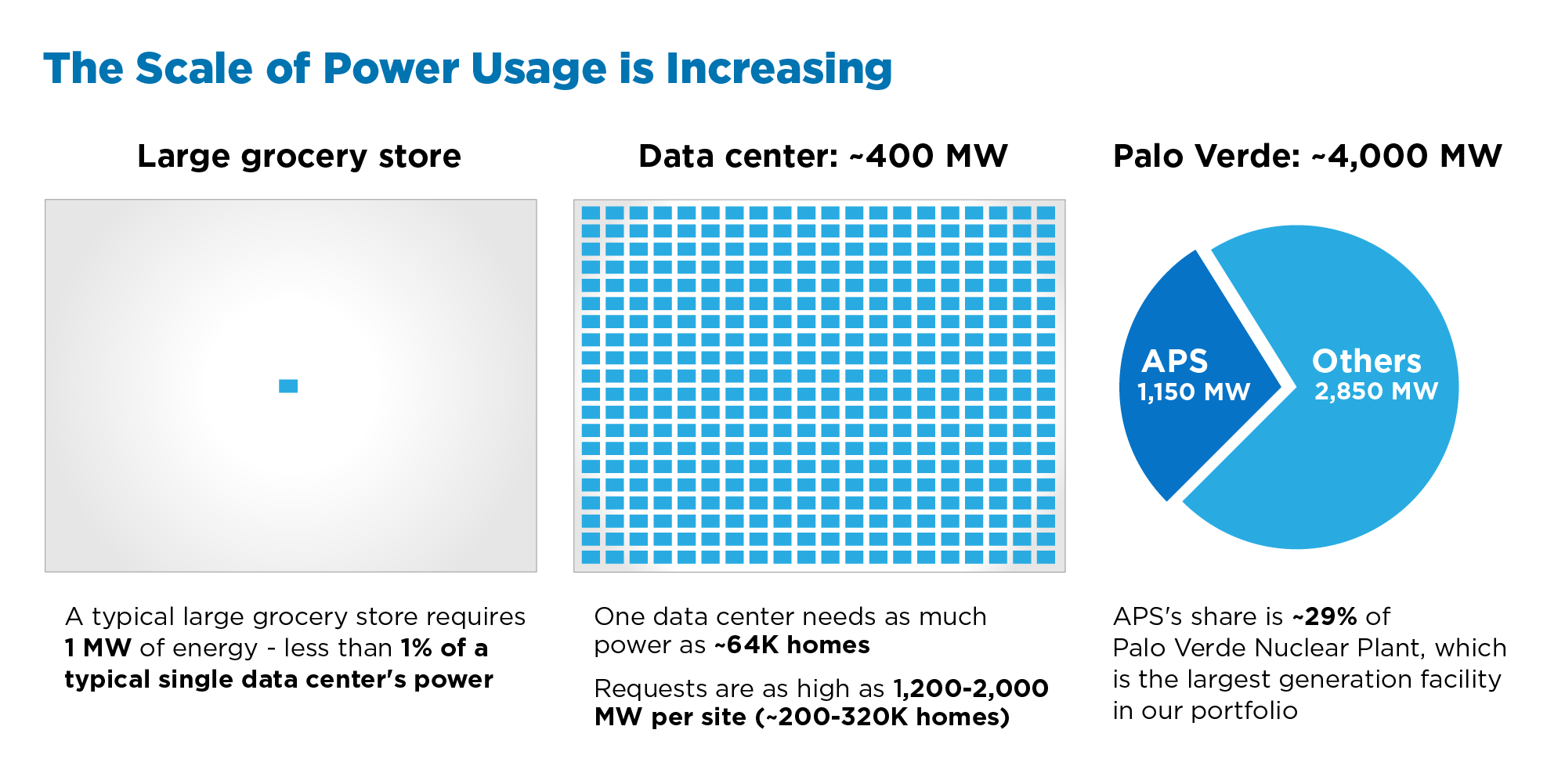
Given these factors, we do not yet have enough power plants, transmission lines, and key infrastructure to serve all these new requests. We will need to build more.
We are committed to doing this in a responsible way — keeping costs as low as possible for our existing customers, ensuring that customers driving growth pay the associated costs, and maintaining some of the country's most reliable electric service our customers count on every day. APS's residential rates remain just below the national average and we are working hard to maintain that.
To meet this challenge, we are doing two main things:
-
Making sure data center rates match the true cost to serve them
In our June 2025 rate request to the Arizona Corporation Commission, we proposed a 45% rate increase for these extra-large energy users. This rate adjustment would help to ensure that data centers, not families or small businesses, continue to pay for their costs of service.
We also included something called formula rates in our rate request. This would allow APS to check each year how much it costs to serve customers and make adjustments. If extra-large customers like data centers cause costs to rise, those costs will be assigned to them.
-
Developing infrastructure for future demand
The future demand for energy from these users is unprecedented, and the timeline to develop infrastructure for their needs has increased. APS is developing an innovative approach through which future infrastructure needs are paid for by the data center customers who would use it, not by existing residential or business customers. Data center customers would sign long-term contracts covering the costs to build and maintain infrastructure over the long-term, ensuring that their service will not be subsidized by existing customers.
Bottom line: As Arizona grows, APS is committed to making sure our existing customers are protected while being a good partner to prospective customers who would like to be a part of the state’s continuing success story. APS will continue to take proactive measures to ensure that data centers, chip makers and other extra-large users will pay the full costs of the energy and upgrades they need, so we can continue delivering safe, reliable service without shifting those expenses to our existing customers.
Hear about APS's Data Center Strategy
VP Jessica Hobbick presents the APS Data Center Strategy to an Arizona legislative committee on Artificial Intelligence & Innovation.
Read the APS Pledge for Responsible Energy Growth
The pledge reaffirms APS’s longstanding principles for protecting customers while serving new companies and industries investing in Arizona.
Data Centers and Extra-Large Energy Users - Frequently Asked Questions
APS is working to protect reliability and affordability for its customers while working to meet the growing needs of data centers and other extra-large energy users.
- Will new data centers raise my electric bill?
No. Data centers, chip makers and other extra-large energy users already pay for what it costs to serve them (they are in a specific rate category). In our June 2025 rate request to the Arizona Corporation Commission, we proposed a more than 45% rate increase for these users to help ensure that data centers continue to pay for their costs of service and avoid shifting those costs to families or small businesses.
- How would the formula rates proposed in your rate case help address data center growth?
With formula rates, APS would evaluate annually whether current rates recover the costs to serve customers. Retail rates would then be adjusted to more appropriately reflect the costs to serve the growth in each customer class. This annual process would verify that residential and other business customers are not receiving cost increases associated with data center growth.
- Why are data centers an energy issue in Arizona?
In 2025, data centers were a relatively small portion of our total peak energy demand — about 5%. However, many data centers and other large energy users have announced their interest in coming to Arizona. The average sized data center in our service territory needs as much energy as about 64,000 homes — and they operate near peak capacity 24 hours a day, 7 days a week. In fact, the Phoenix metro area ranks second in North America for proposed data center development. APS is committed to serving this large magnitude of growth, but only when we can serve without compromising reliability or affordability for other customers.
- If new power plants are needed to serve extra-large energy users, who will pay for them?
APS has developed innovative solutions to ensure appropriate infrastructure needs are paid for by the extra-large energy users, and not by other residential or business customers. These solutions include updates to our extra high load factor (XHLF) rates, minimum bill and collateral requirements, and the opportunity to accelerate the timeline for service through long-term contracts requiring up front contributions to the costs to build new infrastructure. All these strategies are designed so that service for data centers will not be subsidized by existing customers.
- Will adding data centers and other extra-large energy users to the grid hurt reliability?
No, APS is committed to responsibly serving growth for Arizona’s future. That means never compromising reliability and affordability for the families and businesses that count on us for energy and continuing to partner with extra-large energy customers. Our priority is making sure the residents and businesses in Arizona can continue to rely on us to keep the lights on.
- Why can't you just say no to these data centers?
APS provides reliable, affordable service to all customers that locate to our service territory, regardless of business type or class of customer. We recognize the concerns and challenges associated with data centers that have been expressed by some of the communities we serve. We are committed to serving new data centers in a measured and thoughtful way, being very forthright and proactive about our approach. These new customers will pay their share of the energy and upgrades they need so we can continue delivering safe, reliable service without impacting our other customers.